What to Do with Leftover Foreign Currency After Your Holiday
The holiday is over. You have unpacked your bags, gone through the photos, and made peace with the fact that real life has resumed. But somewhere in the bottom of your travel bag, tucked inside a pocket or rattling around in a small zip pouch, is a collection of foreign notes and coins that came home with you.
Maybe it is a handful of Japanese Yen left over from a trip to Tokyo. A few Euro notes from a European summer. Some US Dollars you held back as a buffer and never spent. Whatever the currency, the question is the same: what do you actually do with it now?
Letting it sit in a drawer is the default answer for most Australian travellers, and it is also the most wasteful one. Foreign currency sitting idle at home is money that is slowly losing value in real terms, doing nothing while exchange rates shift around it. The good news is that there are several smart, practical options for dealing with leftover travel money, and some of them are more straightforward than most people realise.
Sell Your Leftover Currency Back to a Specialist Provider
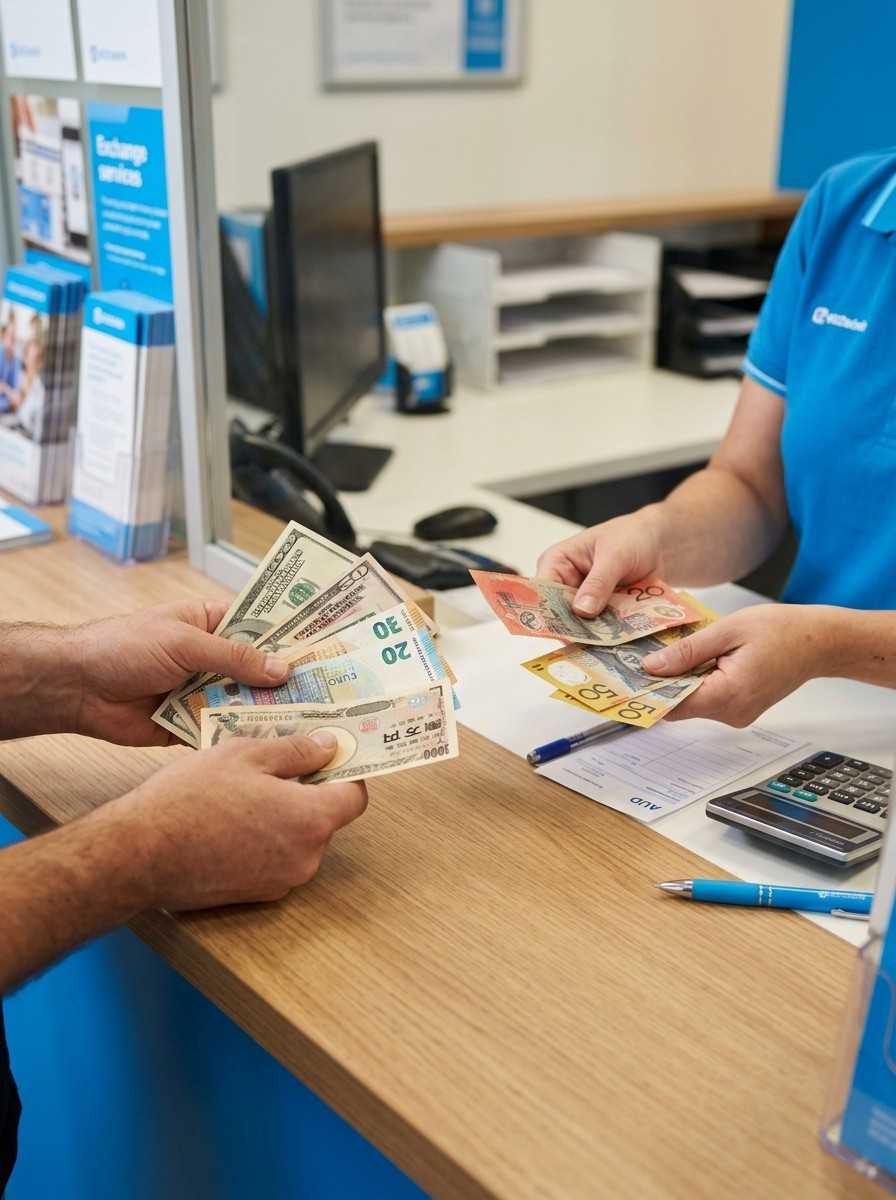
The most financially sensible thing you can do with leftover foreign currency is sell it back to a reputable specialist currency exchange provider. This is called a currency buyback, and it is one of the most underused services available to Australian travellers.
The process is exactly what it sounds like. You bring your leftover foreign notes to a specialist provider, they assess the current exchange rate, and they pay you back in Australian Dollars. For major currencies like US Dollars, Euros, British Pounds, Japanese Yen, and Canadian Dollars, buyback rates from a specialist provider are consistently better than what you would receive at an airport kiosk on your way out of the country.
The sooner you sell back leftover currency after your trip, the better. Exchange rates move constantly. A currency that was strong against the Australian Dollar when you bought it may have softened by the time you get around to selling it back. Acting within a few weeks of returning home gives you the best chance of recovering close to what you originally paid.
At Daneesh Exchange, currency buyback is available for a wide range of foreign currencies. Our rates are transparent, there are no hidden commissions, and the process takes a matter of minutes at our Melbourne and Sydney service locations.
Hold On to It for Your Next Trip
This one sounds obvious, but it is genuinely worth thinking through before you either spend the currency carelessly or sell it back for less than it is worth.
If you are planning to return to the same destination within the next twelve to eighteen months, holding on to your leftover currency is a completely reasonable strategy. Exchange rates fluctuate, and the rate you locked in before your last trip may actually be better than what is available by the time you next need to convert.
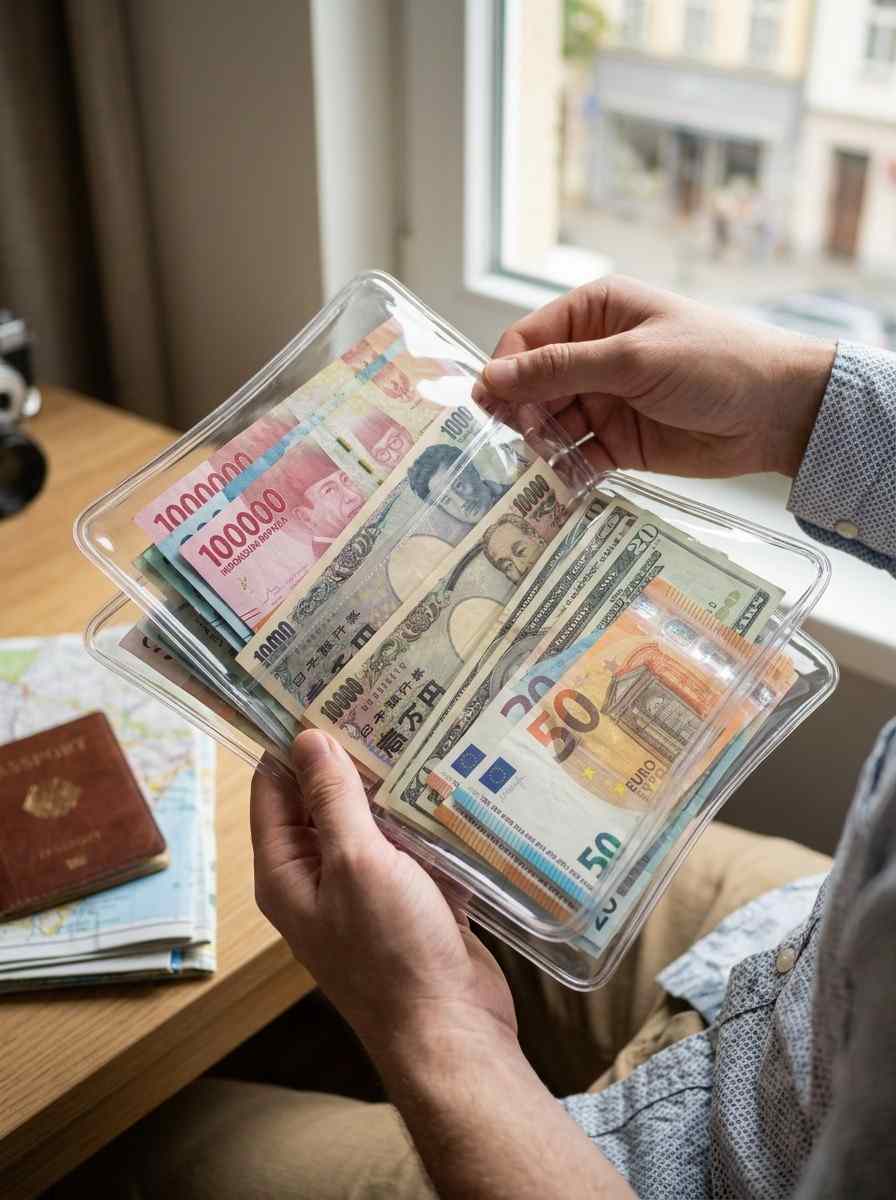
A few things to keep in mind if you are taking this approach. Store notes flat and away from direct sunlight or moisture, as damaged or excessively worn foreign notes can sometimes be refused or discounted by exchange providers when you eventually go to sell them. Keep a record of the amount you have stored and which currency it is, because a mixed collection of notes from multiple trips can become genuinely confusing after a year or two. It is also worth checking whether the currency has a practical shelf life. Most major world currencies remain valid indefinitely, but some countries periodically update their note designs and retire older series, so it pays to confirm before storing them long term.
For popular destinations that Australians revisit frequently, such as Bali, Japan, the United States, and Europe, holding over leftover currency from one trip to the next is a sensible and cost-efficient approach.
The Coin Problem: What to Do with Foreign Coins
This is where things get a little more complicated. Foreign coins are the awkward part of leftover travel money. Most currency exchange providers, including specialist buyback services, only accept foreign banknotes rather than coins. The logistical cost of sorting, counting, and repatriating coins simply does not make the process commercially viable for most providers.
So what can you actually do with a bag of leftover Japanese coins, Euro cents, or Indonesian Rupiah coins? There are a few practical options worth knowing about.



Which Currencies Are Worth Selling Back?
Not all leftover foreign currency is worth the same effort to sell back. The practicality of a buyback depends on the currency, the amount you have left, and the current exchange rate.
Major world currencies with strong liquidity are always worth selling back if you have a meaningful amount remaining. US Dollars are one of the most widely traded currencies in the world, and buyback rates for USD are consistently competitive and the process is straightforward. The same applies to Euros, where there is strong buyback demand given how commonly Australians travel to Europe. British Pounds are worth selling back even in smaller quantities given the high value per unit. Japanese Yen is very popular among Australian travellers and widely accepted by specialist providers for buyback. Canadian Dollars are also widely traded and straightforward to sell back through most specialist providers.
For currencies that have moved significantly against the Australian Dollar since your trip, it is worth checking the current rate before deciding whether to sell back now or hold for better conditions. Indonesian Rupiah is a good example. It is an essential currency for Bali-bound travellers but has a lower per-unit value, which means a large volume of notes may represent a relatively modest AUD amount when converted back. If you are only bringing home a small amount of IDR, weigh up whether the convenience of selling it back outweighs holding it for your next Bali trip.
One Thing to Avoid: Airport Currency Buyback on Departure
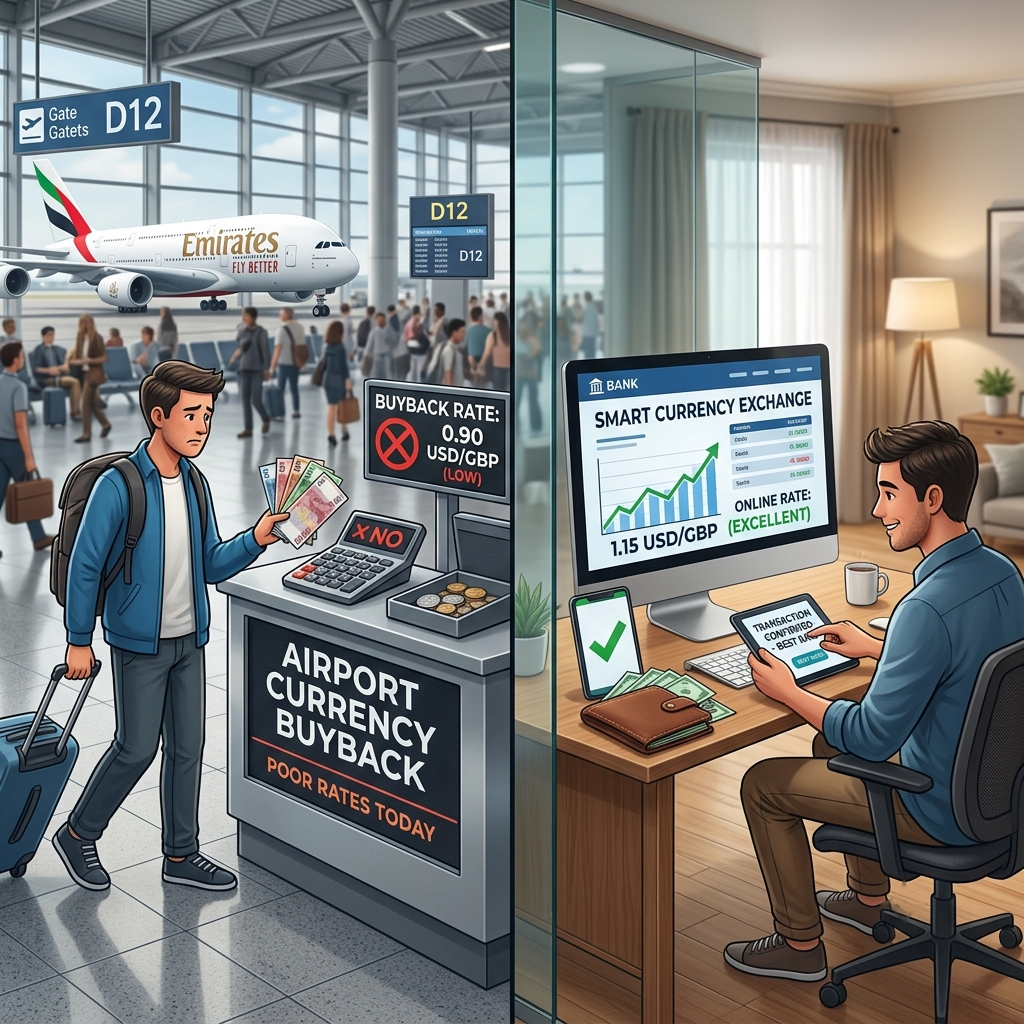
The same logic that makes airport currency exchange expensive when buying foreign cash applies equally to selling it back. Airport buyback desks offer some of the worst rates in the market because they operate in a captive environment where travellers are time-pressed and have very limited alternatives.
If you find yourself at an airport with leftover foreign currency and the temptation to offload it at the terminal desk, the practical advice is straightforward. Limit any airport transaction to what you genuinely cannot deal with any other way, and handle the rest through a specialist provider when you are back home and have time to compare rates properly. The difference in the buyback rate between an airport kiosk and a specialist provider can be meaningful on larger amounts, and it simply is not worth the convenience premium when you have a better option available.

The Smarter Approach: Buying Only What You Need
The best way to deal with leftover foreign currency is to reduce how much you bring home in the first place. This does not mean arriving at your destination without enough cash. It means being realistic about your spending patterns and ordering accordingly.
A few habits that experienced travellers use to minimise leftover cash are worth adopting. Track your daily cash spending during the first two or three days of a trip to get a realistic sense of your actual consumption rate, then adjust your remaining cash strategy accordingly. In the final two days of a trip, spend down your cash deliberately on meals, snacks, transport, and small souvenirs rather than conserving it. Use your remaining small denomination notes on vending machines, convenience store purchases, and street food in the final hours before heading to the airport. Keep a small emergency buffer of around five to ten percent of your total cash as a backup, but resist the instinct to carry significantly more than you expect to spend.
None of this requires precise budgeting or complicated planning. It is simply a matter of being slightly more intentional about cash spending in the last day or two rather than defaulting to bringing everything home untouched.
Frequently Asked Questions
Can I sell back any foreign currency at Danesh Exchange?
Danesh Exchange offers currency buyback on a wide range of foreign currencies. Major currencies including USD, EUR, GBP, JPY, CAD, and others are accepted at competitive buyback rates with zero commission. For specific currency availability and current buyback rates, visit our Melbourne or Sydney service locations or check the Danesh Exchange website.
Do I get a better rate selling foreign currency back to a specialist or a bank?
In most cases, a specialist provider offers better buyback rates than a bank. The same factors that make specialist providers more competitive when buying foreign currency apply in reverse: lower overhead, higher volume, and tighter margins. Banks treat currency buyback as a supplementary service and price it accordingly, which means the rates they offer rarely match what a dedicated specialist can deliver.
What happens to foreign coins that I cannot sell back?
Foreign coins are generally not accepted by currency exchange providers due to the logistical cost involved. Practical alternatives include donating them to airport charity collection points, passing them on to friends or family who are travelling to the same destination, or keeping them as a float for your own return trip. UNICEF’s Change for Good program is one of the most widely available options for donating foreign coins in Australian airports.
Is there a minimum amount required to sell back foreign currency?
Minimum buyback amounts vary by provider and currency. For very small amounts of leftover cash, it is worth calling ahead to confirm whether the transaction is worth processing. As a general rule, amounts above the equivalent of AUD 50 are typically straightforward to sell back through a specialist provider.
Final Thoughts
Leftover foreign currency is one of those minor post-trip loose ends that most travellers never quite get around to dealing with properly. Notes accumulate in drawers, coins rattle around in zip pouches, and gradually the trip fades from memory along with any sense of urgency about converting the cash back.
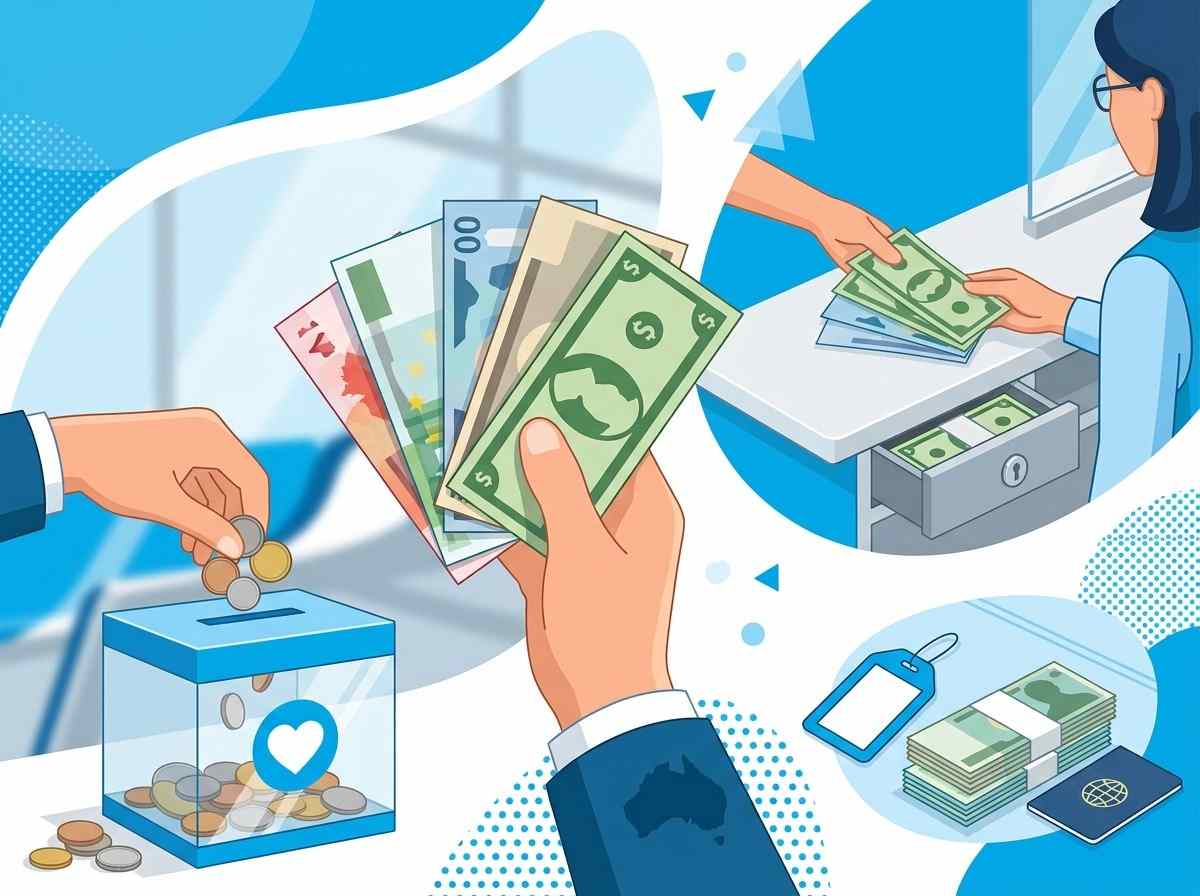
The practical reality is that dealing with leftover travel money promptly is simply good financial housekeeping. Selling back major currency notes to a specialist provider like Danesh Exchange within a few weeks of returning home puts real Australian dollars back in your pocket with minimal effort. And for coins and small amounts, the options range from zero effort charity donations to a genuine head start on your next trip.
If you are planning your next international trip, Danesh Exchange is here to help you get the right amount of foreign currency at a competitive rate before you fly. Check our live rates across all major travel currencies at Currency Exchange Australia, or visit our Currency Exchange Melbourne and Currency Exchange Sydney locations for in-person service.