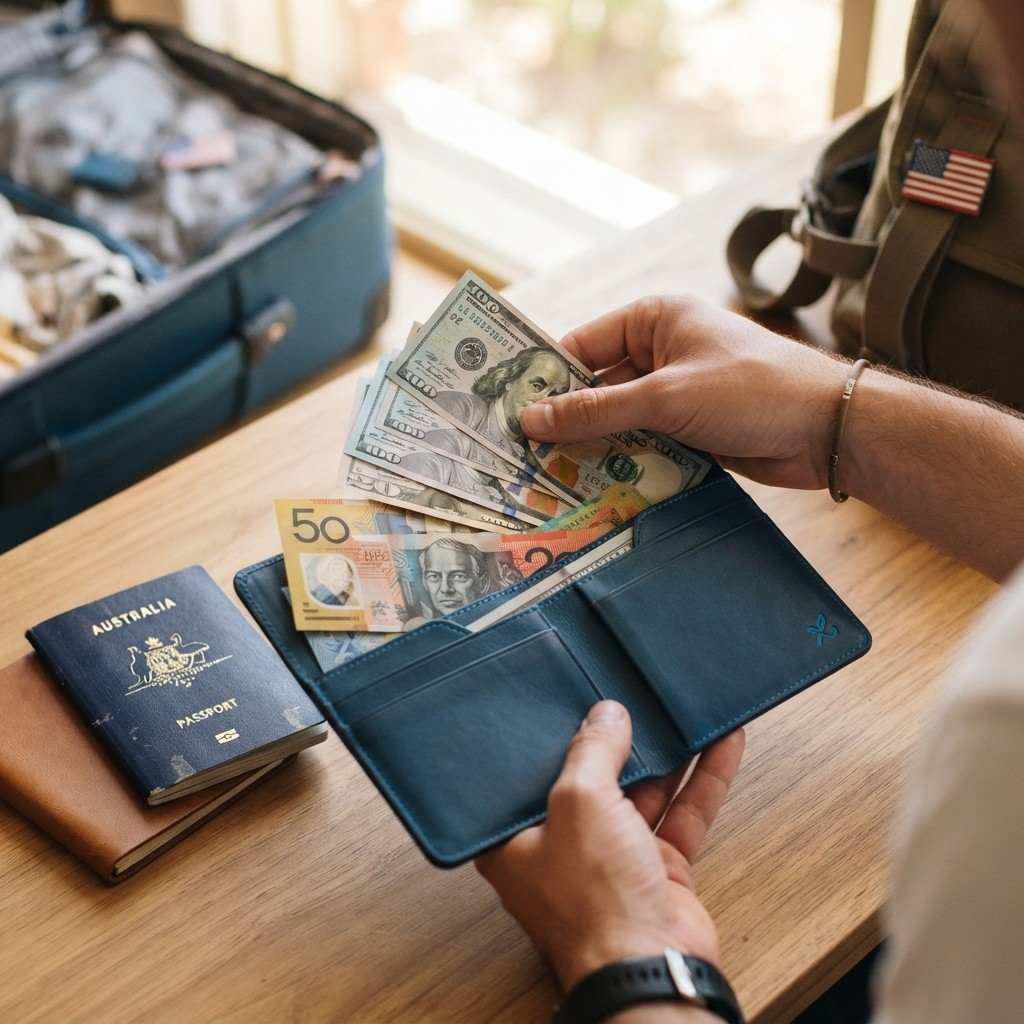
AUD to USD Exchange Rate Explained: What Makes the Australian Dollar Rise and Fall?

Understanding the AUD to USD Exchange Rate
If you are planning a trip to the United States, one of the things worth checking before departure is the AUD to USD exchange rate.
The value of the Australian dollar against the US dollar does not stay the same. It can rise or fall depending on economic conditions, interest rate decisions, international trade and developments in global financial markets.
Even a relatively small movement can make a difference to your travel budget. If you are exchanging several thousand Australian dollars, a change in the rate can affect how many US dollars you receive.
But what actually causes these movements? And how can you make more informed decisions when exchanging your money? Let us look at the main factors that influence the AUD to USD exchange rate.
What is the AUD to USD exchange rate?
It tells you how many US dollars one Australian dollar buys. At a rate of 0.65:
These figures are illustrative, not current exchange rate quotes.
Appreciation
The Australian dollar strengthens, so each one buys more US dollars.
Depreciation
The Australian dollar weakens, so the same amount buys fewer US dollars.
For travellersA stronger Australian dollar generally means more spending money when you exchange AUD for USD.
Interest rates in Australia and the United States
Money tends to go where returns look better.
The Reserve Bank of Australia sets Australia's cash rate, while the US Federal Reserve determines monetary policy in the United States. These decisions can influence where investors choose to put their money.
If Australian rates look more attractive than US rates, some international investors may take more interest in Australian assets, which can lift demand for the Australian dollar. If US rates offer better returns, investors may favour US assets instead, and demand for the US dollar can rise.
Exchange rates don't react to rate changes in a simple or predictable way. Investors also weigh what central banks are expected to do next, plus inflation, growth and market conditions.
For travellersRBA and Fed announcements can sometimes move the rate.
Inflation and economic conditions
Prices shape central bank decisions, and those shape currencies.
Inflation affects the cost of living, purchasing power and the decisions central banks make. When it rises, central banks may consider lifting interest rates, which can change investor confidence and how attractive a currency looks.
Economic performance matters too. A strong Australian economy, backed by employment, business activity and consumer spending, can build confidence in the Australian dollar. Strong US data can support the US dollar in the same way.
Both economies matter. AUD/USD reflects the relative outlook for Australia and the United States, not either country on its own.
Commodity prices and Australia's exports
When what Australia sells is worth more, the dollar often follows.
Australia is a major exporter of iron ore, natural gas and agricultural products. When those prices rise, export earnings may climb, which can improve the country's terms of trade and support demand for Australian dollars. When they fall, the opposite may happen.
That's why the Australian dollar is sometimes called a commodity-linked currency.
Commodities are only one piece. Interest rates, global demand, economic conditions and sentiment all act on the currency at the same time.
Global events and demand for the US dollar
When investors get nervous, the US dollar tends to attract them.
The US dollar plays a central role in international trade and financial markets. In uncertain times, investors often move towards assets they see as relatively safe and liquid, and the US dollar can benefit.
Geopolitical tension, market disruptions, trade disputes and worries about global growth can all move currencies. If investors turn cautious, they may pull back from currencies more sensitive to risk appetite, including the Australian dollar, which puts downward pressure on AUD/USD. When confidence returns, the Australian dollar may get support.
These moves can happen fast, so the rate can shift even when nothing has been announced in Australia.
International trade and investment
Every cross-border payment is a trade between currencies.
Australian businesses import goods and services, and Australian exporters get paid by overseas customers. Investors move money across borders to buy shares, bonds, property and other assets. Each of these creates demand for one currency or the other.
More demand for Australian exports can support the Australian dollar, and so can overseas investment into Australian assets. The same logic applies to the US dollar, since international businesses and investors regularly need USD to settle deals and manage investments.
The balance of these flows is one of several factors that set each currency's value.
No single factor sets the rate
- Interest rates
- Inflation
- Commodities
- Global events
- Trade flows
All five push on the rate at once, which is why it can move in ways that are hard to predict.
Why Does the AUD to USD Rate Change So Often?
The foreign exchange market operates globally, and currencies are traded throughout the working week across different financial centres. The AUD to USD rate can therefore change in response to:
- Central bank interest rate announcements
- Inflation and employment reports
- Economic growth figures
- Commodity price movements
- Global financial market conditions
- Political developments and international events
- Investor expectations and market sentiment
Not every announcement leads to a major movement. Sometimes markets have already anticipated the news, while unexpected developments can cause sharper changes. This is why checking the exchange rate once does not guarantee that the same rate will be available later.

What Does the AUD to USD Exchange Rate Mean for Australian Travelers?
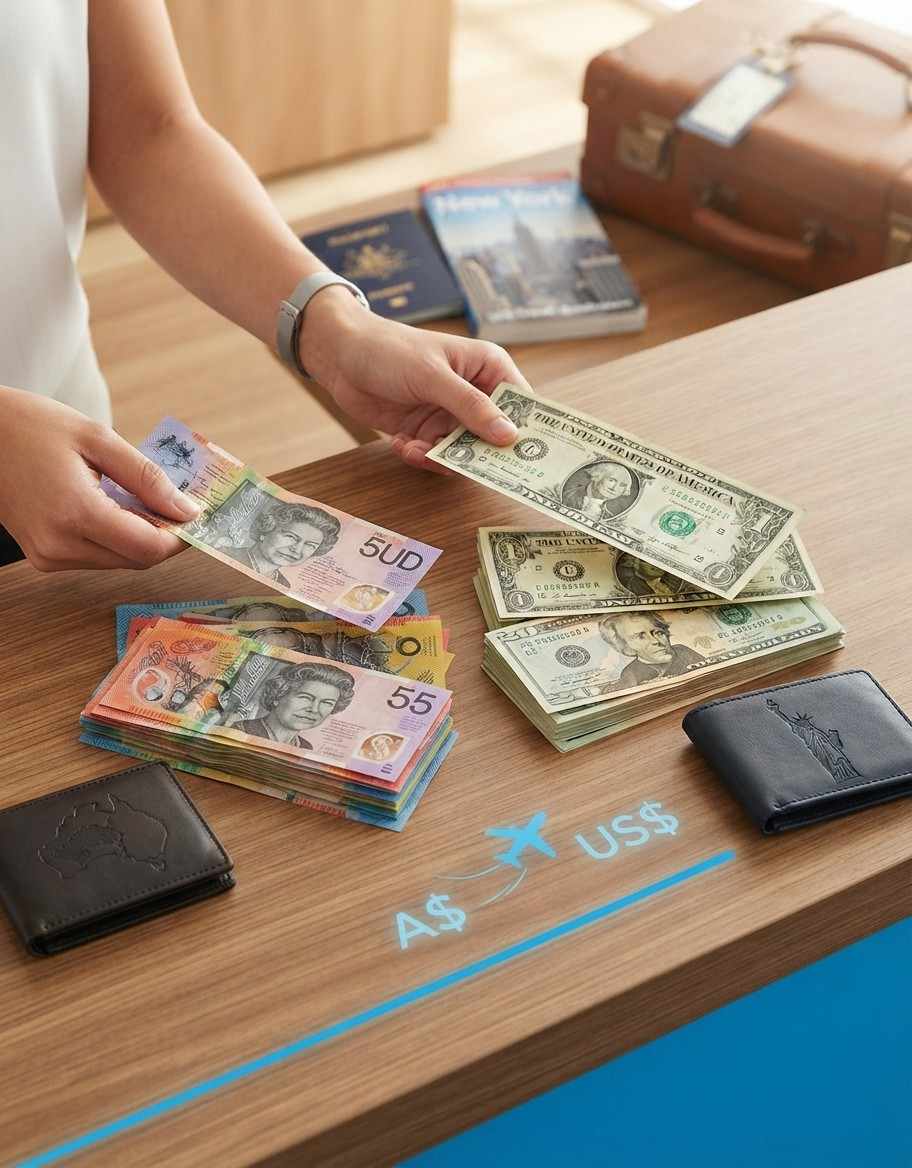
If you are travelling from Australia to the United States, the exchange rate affects how much US dollar cash you can receive for your Australian dollars.
Consider this illustrative example:
| Australian dollars exchanged | At 0.65 | At 0.68 |
|---|---|---|
| AUD 500 | USD 325 | USD 340 |
| AUD 1,000 | USD 650 | USD 680 |
| AUD 2,000 | USD 1,300 | USD 1,360 |
| AUD 5,000 | USD 3,250 | USD 3,400 |
The difference becomes more noticeable when exchanging larger amounts. For example, exchanging AUD 2,000 at an illustrative rate of 0.68 would give you USD 60 more than exchanging the same amount at 0.65.
This is why it can be useful to monitor the exchange rate while planning your trip rather than leaving all your currency arrangements until the last minute.
What Should You Check Before Exchanging Australian Dollars for US Dollars?
The market exchange rate is useful as a reference, but it is not necessarily the rate you will receive when exchanging cash. Before making a transaction, consider the following:
Compare the offered exchange rate. Check the actual AUD to USD rate offered by the currency exchange provider. Compare the amount of US dollars you will receive for the same Australian dollar amount.
Check for additional fees. Look at the total cost of the transaction. A provider may advertise an attractive rate but charge separate fees.
Consider how much cash you need. Estimate your expenses before travelling. You may need cash for smaller purchases, tips and situations where card payments are not convenient.
Avoid leaving everything until the last minute. Arranging your travel money ahead of departure gives you time to compare options and understand the rate being offered.
Choose a reliable currency exchange provider. Check the provider’s service information, transaction terms and available customer support before proceeding.
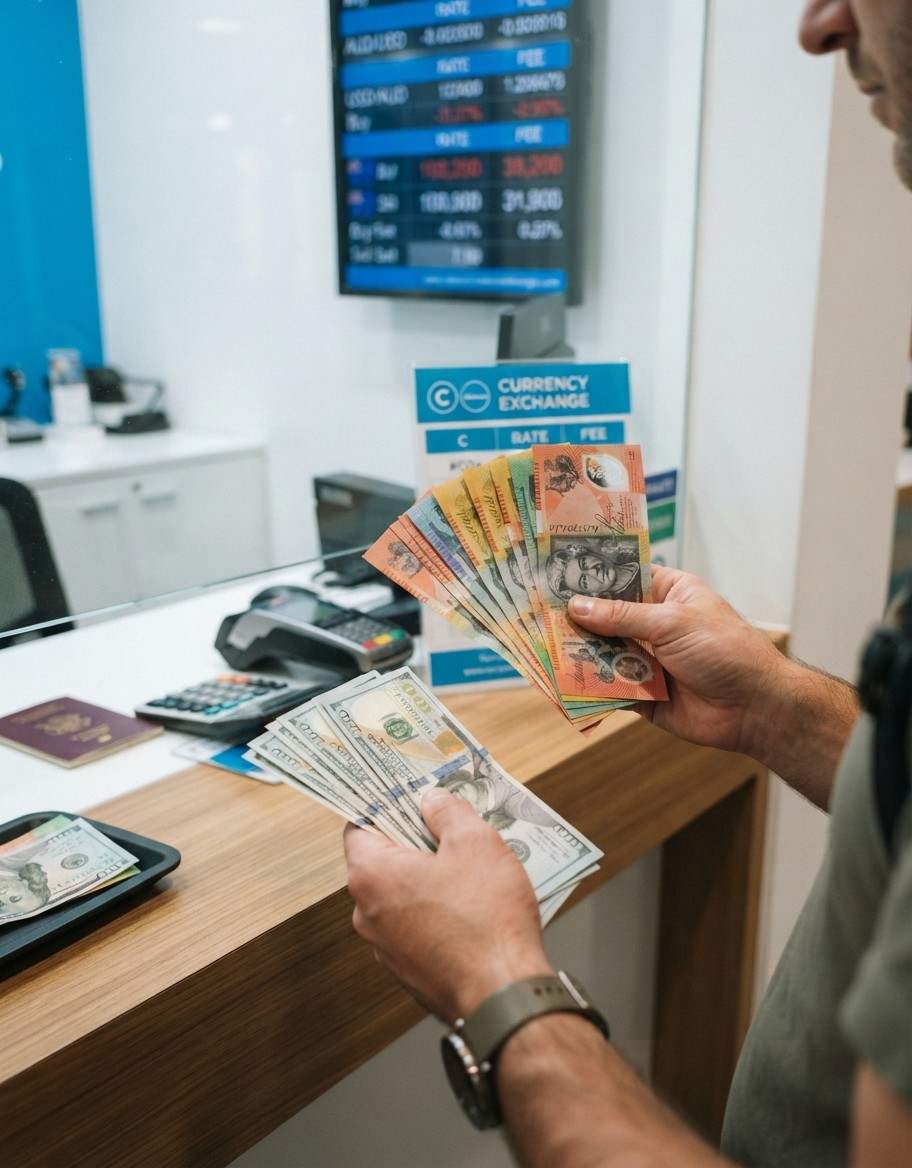

Should You Wait for the Australian Dollar to Strengthen?
This is a common question among travellers.
It can be tempting to wait for a better AUD to USD rate before exchanging money. However, predicting short-term currency movements is difficult, even for experienced market participants.
The Australian dollar could strengthen, weaken or remain relatively stable depending on economic developments and market expectations.
Rather than trying to identify the perfect exchange rate, consider your travel date, budget and currency requirements. Monitoring rates in advance and comparing the actual amount you will receive can help you make a more informed decision.
If you have a fixed travel date, planning ahead is generally more practical than relying on a last-minute improvement in the market.
Frequently Asked Questions (FAQ)
What does AUD to USD mean?
AUD to USD refers to the exchange rate between the Australian dollar and the US dollar. It indicates how many US dollars you can receive for one Australian dollar.
What makes the Australian dollar stronger against the US dollar?
Factors such as relatively attractive Australian interest rates, stronger commodity prices, positive economic conditions and improved global investor confidence can support the Australian dollar. However, no single factor determines the exchange rate.
Why does the US dollar sometimes rise when global markets are uncertain?
During periods of financial or geopolitical uncertainty, investors may favour currencies and assets they consider relatively safe and liquid. The US dollar can benefit from this demand.
Is the AUD to USD exchange rate the same everywhere?
No. Market exchange rates are commonly used as reference rates, but banks and currency exchange providers may offer different customer rates. Fees and transaction terms can also affect the final amount received.
When is the best time to exchange AUD for USD?
There is no guaranteed best time to exchange currency. Exchange rates fluctuate, and predicting short-term movements is difficult. Travellers should monitor rates, compare providers and plan their currency requirements before departure.
How can I exchange Australian dollars for US dollars before travelling?
You can arrange US dollars through a currency exchange provider before leaving Australia. Compare the offered rate and transaction terms, then choose an option that suits your travel plans.
Get Ready for Your Trip with US Dollars
Understanding the AUD to USD exchange rate can help you plan your travel budget more confidently. While economic conditions and global events influence currency movements, the rate you receive from an exchange provider is what ultimately matters when arranging your travel money.
If you are preparing for a trip to the United States, explore the US dollar exchange service from Danesh Exchange to learn more about arranging your US dollars before departure.
Plan ahead, compare your options and make your travel money arrangements with confidence.