Cash Culture in Japan: Why Credit Cards Are Not Enough for Your Trip
Picture this. You have just arrived in Kyoto after a long-haul flight from Melbourne. You are tired, hungry, and the small ramen shop around the corner from your hotel looks perfect. You sit down, order a bowl, and when the bill arrives you reach for your credit card. The staff member smiles politely and points to a small sign near the register. Cash only.
It is a moment that catches a surprising number of first-time visitors to Japan completely off guard. Here is one of the most technologically advanced countries on earth, and yet physical cash remains the dominant form of payment in a huge portion of daily life. Not as a quirk or an inconvenience, but as a genuine cultural norm that shapes the way Japanese society functions.
If you are planning a trip to Japan from Australia, understanding this before you leave is not just helpful. It is essential. This guide covers everything you need to know about Japan’s cash culture, where you will genuinely need Yen in hand, and how to organise your Japanese Yen before you fly.

Why Japan Is Still a Cash First Society
The question most travellers ask when they discover Japan’s preference for cash is a simple one: why? For a country that gave the world bullet trains, robot hotels, and some of the most sophisticated consumer electronics on the planet, the attachment to physical currency feels counterintuitive.
The answer is rooted in something deeper than technology adoption. Cash in Japan is tied to deeply held cultural values around privacy, precision, and trust. Many Japanese consumers are cautious about digital payment systems and the data trails they leave behind. Physical cash is anonymous, exact, and universally accepted. There is also a generational dimension at play. Older populations, who represent a significant share of Japanese consumers and business owners, grew up in a cash economy and have had little reason to change.
The result is a country where some of the world’s most famous convenience stores accept contactless payments at the register while the traditional noodle shop three doors down has operated on cash only for four decades and has no plans to change.
Worth knowing: Japan has been gradually increasing card acceptance in urban areas, partly in preparation for international tourism growth. However, this shift is concentrated in large cities and tourist-facing businesses. The moment you step outside of central Tokyo, Osaka, or Kyoto and into local neighbourhoods, regional towns, or rural areas, cash remains firmly in charge.
Where You Will Genuinely Need Cash in Japan
The safest assumption when travelling in Japan is that you will need cash far more often than you expect. Here is a breakdown of the specific situations where Yen in your wallet is not optional.


The Convenience Store Exception: What ATMs Actually Work in Japan
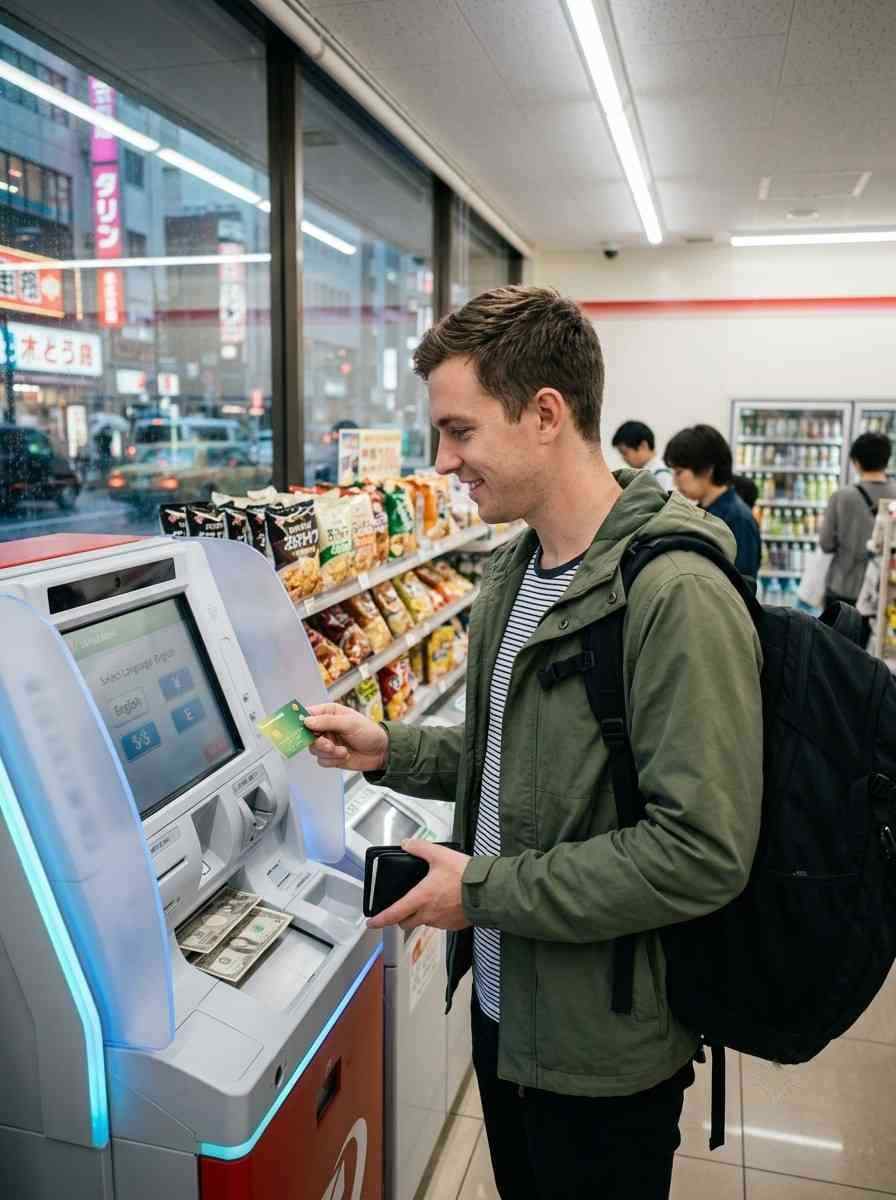
One of the most practical pieces of advice for Japan-bound travelers is to know which ATMs reliably accept international cards. Not all of them do.
The two most consistent options for Australian cardholders are Seven Bank ATMs, located inside every 7-Eleven convenience store across Japan, and Japan Post Bank ATMs, located at post offices. Both networks accept most international Visa, Mastercard, and Maestro cards and provide instructions in English.
This means that in a genuine cash emergency, finding a 7-Eleven and withdrawing Yen from the ATM is a reasonable backup strategy. However, there are a few important limitations to be aware of:
- Your Australian bank will likely charge an international transaction fee and a currency conversion fee on each withdrawal, which adds cost on top of whatever the ATM charges.
- The AUD to JPY rate applied to ATM withdrawals is determined by your card network on the day of the transaction. You have no control over timing or rate.
- Daily withdrawal limits on international cards are often lower than domestic limits, which can restrict how much you can access at once.
- In rural areas and smaller regional towns, even 7-Eleven stores are less common and Japan Post Bank ATMs may have limited hours.
ATMs are a useful safety net. They are not a substitute for arriving with adequate Japanese Yen already organised.
How Much Japanese Yen Should You Carry Day to Day?
The amount of cash you need in Japan depends heavily on your travel style, your itinerary, and the types of places you plan to visit. As a practical daily budget for Australian travelers spending a mix of time in cities and regional areas:
| Travel Style | Estimated Daily Cash Spend | Suggested Daily Float |
|---|---|---|
| Budget traveler | JPY 5,000 to 8,000 | JPY 10,000 |
| Mid-range traveller | JPY 10,000 to 15,000 | JPY 20,000 |
| Comfort or luxury | JPY 20,000 and above | JPY 30,000 to 50,000 |
A useful personal rule for any Japan trip: never let your wallet drop below JPY 10,000. That threshold gives you enough to cover a meal, a taxi, an entry fee, and a small emergency without needing to find an ATM urgently. Japan is an extremely safe country, but carrying cash there is normal, expected, and perfectly secure.
The Right Mix of Notes and Coins to Carry
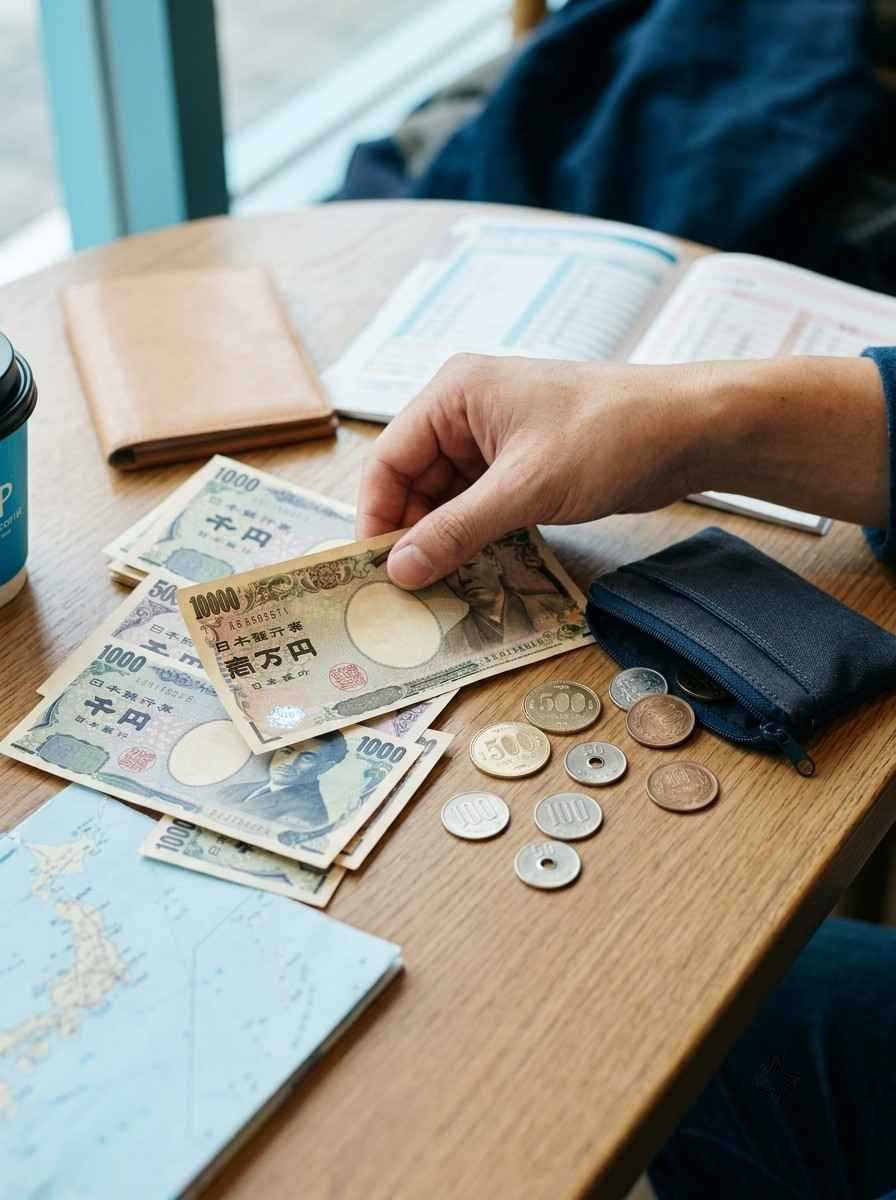
How you carry your Yen matters almost as much as how much you carry. Japan’s cash culture includes a quiet social expectation around payment precision. Handing over a large note for a small purchase and leaving the vendor to scramble for change is mildly impolite. Having the right denominations ready is simply good manners.
When ordering your Japanese Yen from Danesh Exchange, request a mix across the following:
- JPY 1,000 notes: Your most used denomination. Meals at smaller restaurants, convenience store purchases, bus fares, temple entry fees, and street food all fall in this range.
- JPY 5,000 notes: Useful for mid-sized purchases, splitting costs at restaurants, and topping up IC transport cards at station machines.
- JPY 10,000 notes: The largest commonly used note. Reserve these for accommodation payments, larger shopping, and situations where you know change will not be a problem.
Coins are also a regular part of daily spending in Japan. The JPY 500 coin is particularly valuable, used in vending machines, coin lockers, and smaller purchases. You will accumulate coins quickly once you arrive. A small zip coin purse is one of the most genuinely useful things you can pack.
Why Ordering Your Japanese Yen Before You Fly Is the Smartest Move
Given everything above, the single most practical step any Australian traveller can take before a Japan trip is to organise their Japanese Yen in advance, ideally at least one to two weeks before departure.
Here is why ordering through a specialist provider like Danesh Exchange makes more sense than any of the alternatives:
- Better rates than banks or airports: Danesh Exchange offers competitive live AUD to JPY rates with zero commission, meaning you receive significantly more Yen per Australian dollar compared to bank branches or airport kiosks.
- Guaranteed stock: Japanese Yen is one of the most popular travel currencies for Australians. During peak travel periods such as cherry blossom season and school holidays, stock can tighten at branch level. Ordering online through Danesh Exchange ensures your Yen is allocated and packed securely at the time of your order.
- Flexible delivery: Receive your Yen via secure home delivery or collect from one of over 3,000 Australia Post locations nationwide. No last-minute branch visits required.
- Right denominations from the start: Specify the mix of notes you need when ordering so you arrive in Japan with the right denominations ready for day one, not after a scramble at a 7-Eleven ATM.

Frequently Asked Questions
Is Japan becoming more card friendly for tourists?
Gradually, yes. Major cities, department stores, large hotel chains, and international-facing businesses have increased card acceptance in recent years. However, the shift is slow and uneven. Outside of central urban areas and established tourist corridors, cash remains the dominant payment method. Planning your trip around card acceptance alone is a risk that most experienced Japan travelers would not recommend.
Can I use Apple Pay or Google Pay in Japan?
Some larger retailers, convenience stores, and transport systems in Japan support contactless mobile payments. However, coverage is inconsistent and many systems require a Japanese bank account or a local IC card rather than an international payment method. Contactless mobile payment is a useful supplement in Japan, not a replacement for Yen.
What should I do if I run out of cash in Japan?
Head to the nearest 7-Eleven and use the Seven Bank ATM, or find a Japan Post Bank ATM at a local post office. Both reliably accept most international Visa and Mastercard cards and provide English instructions. Be aware that your Australian bank may apply international transaction and currency conversion fees to the withdrawal. To avoid this situation altogether, carry more Yen than you think you need and keep your daily float topped up.
How do I order Japanese Yen from Danesh Exchange?
Ordering is straightforward. Visit the Danesh Exchange website, select Japanese Yen, enter the amount you need, and lock in the live AUD to JPY rate. Choose between secure home delivery or Click and Collect from your nearest Australia Post location. Your order is typically ready within 2 to 3 business days. Photo ID is required on collection.
Final Thoughts
Japan is one of the most rewarding travel destinations in the world for Australian visitors. The food, the culture, the landscapes, and the sheer variety of experiences available make it a country that earns its place on nearly every serious travel bucket list.
But Japan rewards preparation. Travellers who arrive with their Yen organised, their denominations sorted, and a realistic sense of how cash-dependent daily life in Japan actually is, have a smoother and more enjoyable experience from the moment they land.
Do not leave this one until the airport. Order your Japanese Yen online through Daeesh Exchange before you fly, lock in a competitive rate with zero commission, and arrive ready for everything Japan has to offer.
Check today’s live AUD to JPY exchange rates on our Japanese Yen currency exchange page, or visit our Currency Exchange Melbourne and Currency Exchange Sydney locations for in-person service. For all other travel currencies, explore our full range at Currency Exchange Australia.